Improving the billing
experience at Edge
Edge Technologies and Automations
Y 2026
Team members
1 x Product Designer (My role), 1 Product Manager, 2 Engineers
Devices
Web
Softwares

Background
With a legacy payment processing system already integrated with Stripe, we wanted to modernize the process to make it more flexible, reduce costs, and improve the overall customer experience.
In 2023, Edge launched a lean MVP payment platform to simplify monthly payments and introduced customer-managed payroll for greater control. However, this added complexity to the billing experience, making it harder for customers to understand their charges. This project aims to simplify billing, improve clarity, and optimize costs through better use of Stripe and our in-house payment infrastructure.
Approach
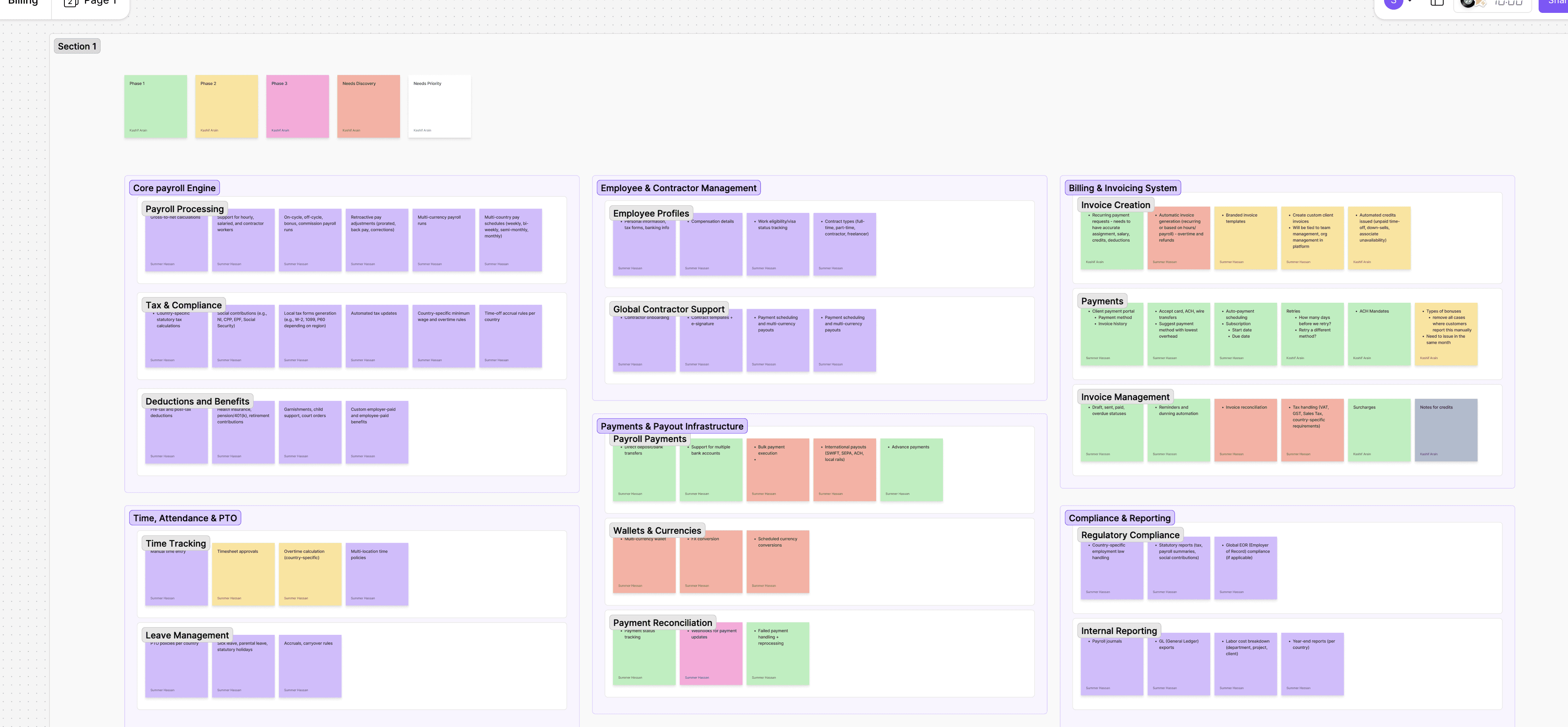
First steps included just understanding our finance ecosystem and understand where stakeholders (Customer, Talent and Admin) are being impacted the most.
1
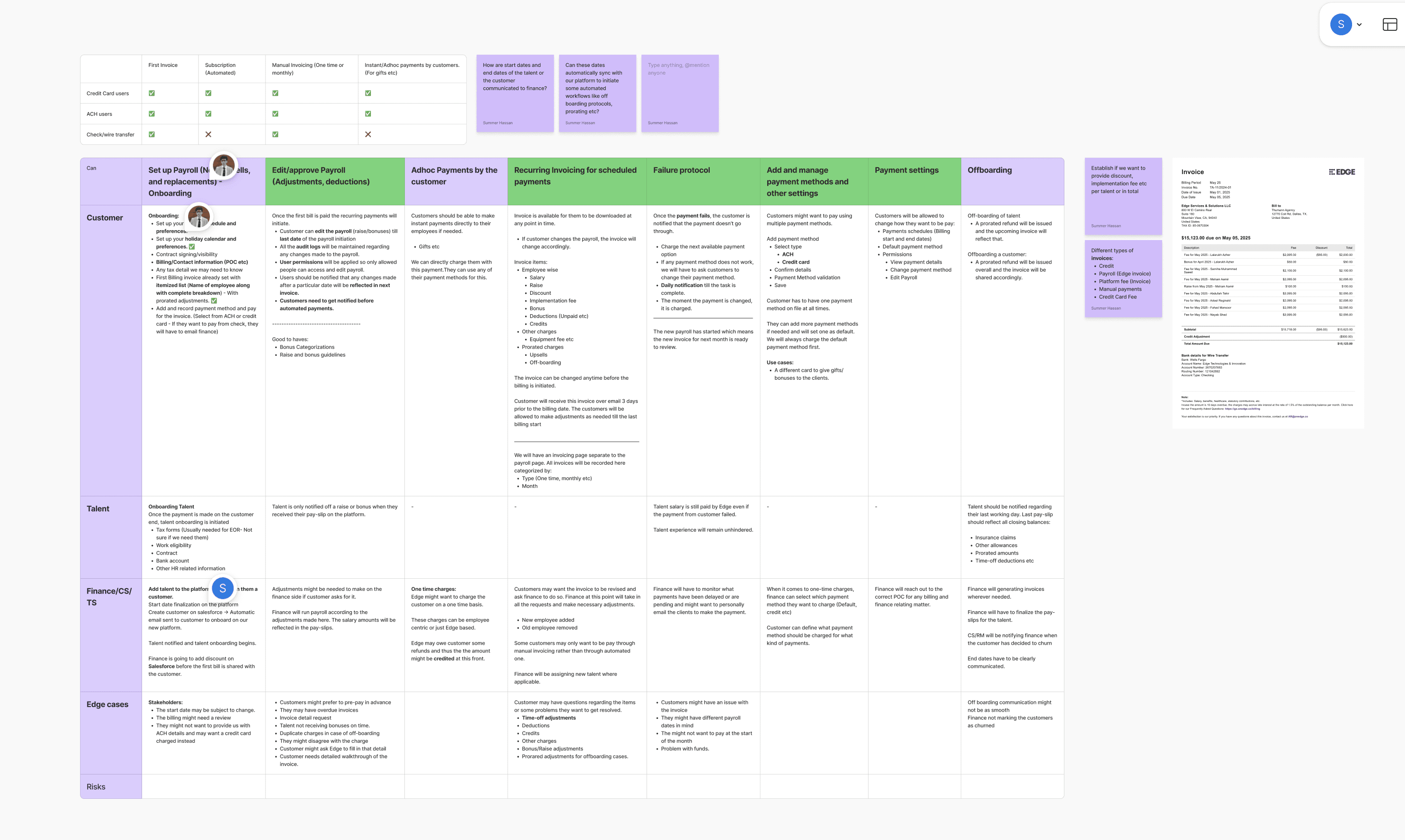
Benchmarking and card sorting to highlight key gaps our product has when it comes to billing and how to priortise and scope those for this project
2
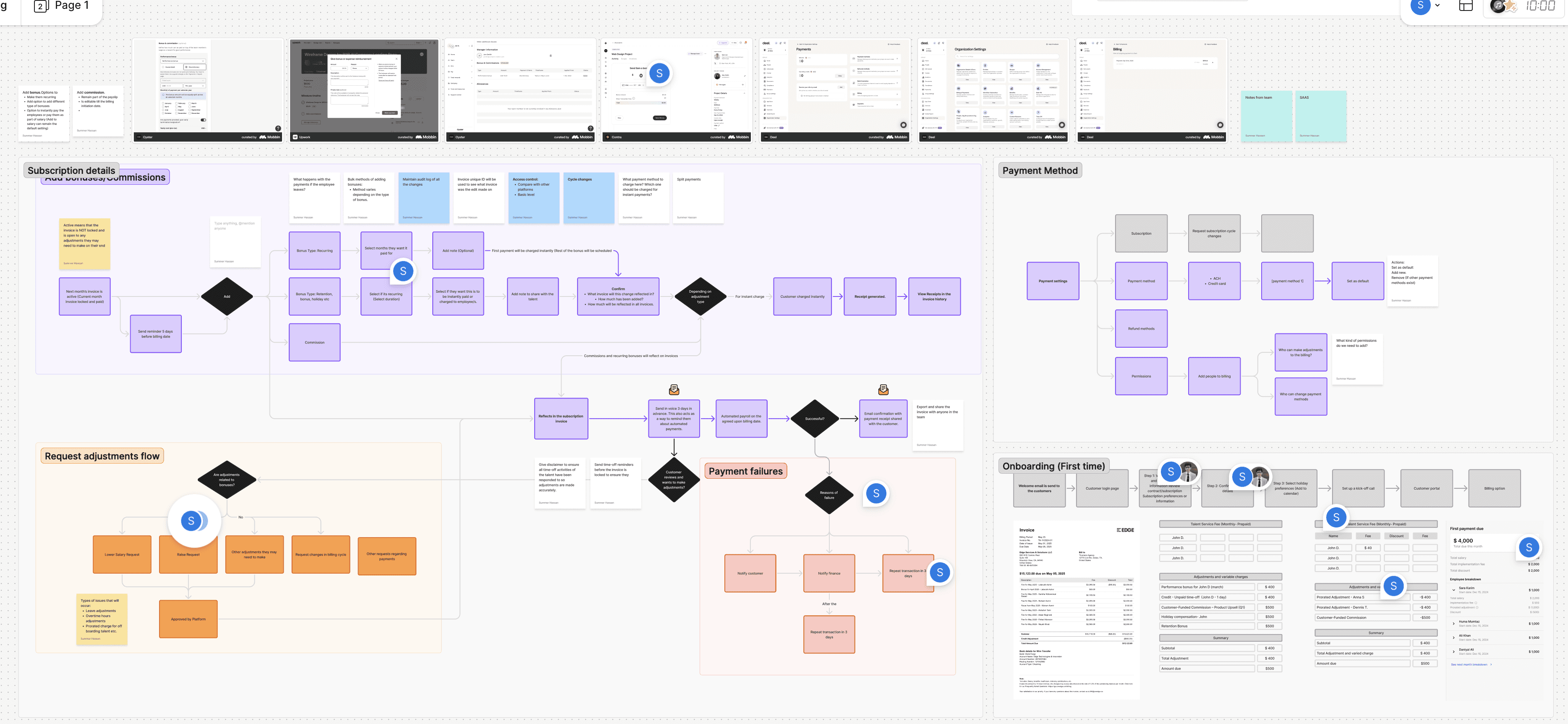
Journey mapping to identify various touch points where the customer, talent and edge interact with one another regarding payroll or billing.
3
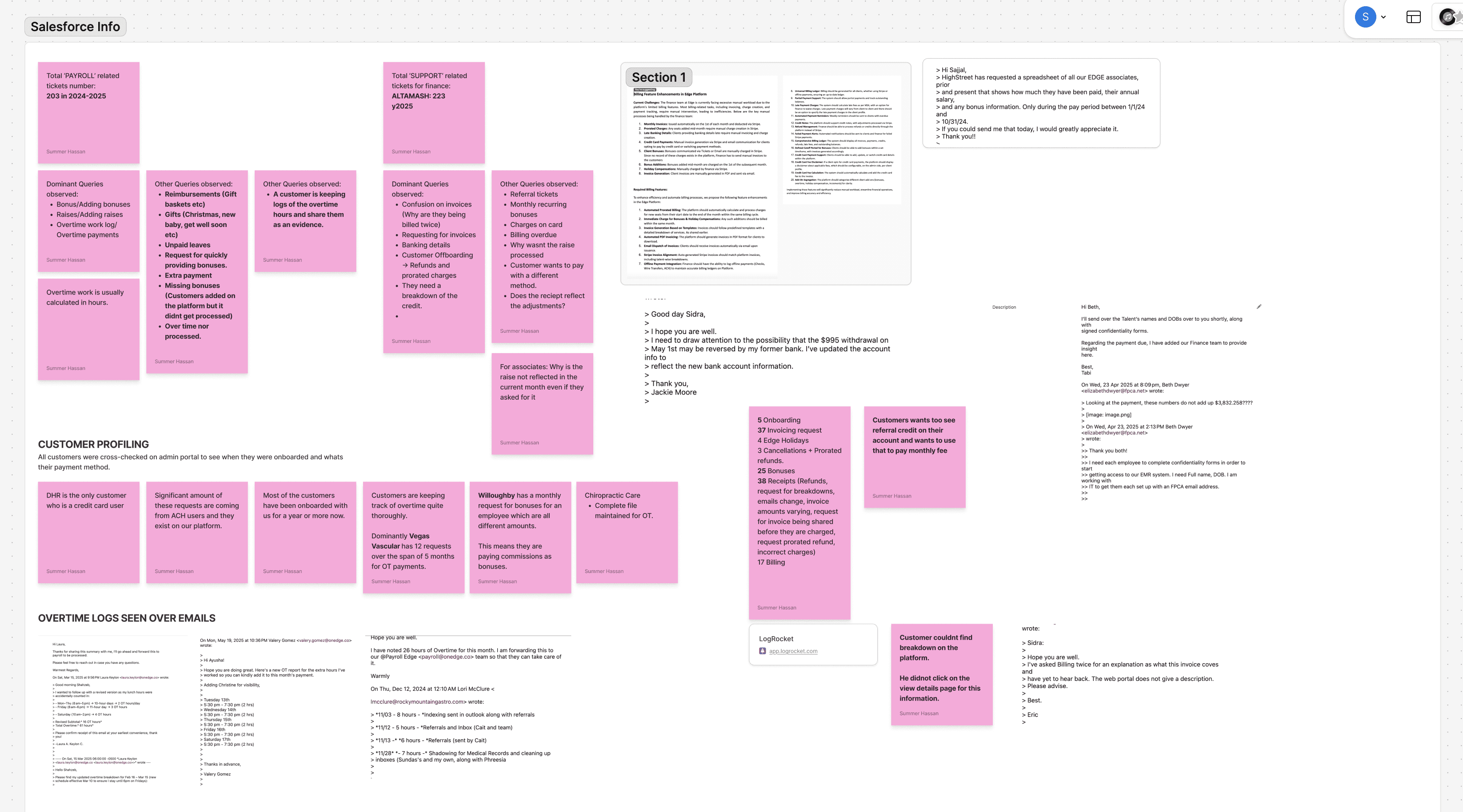
Understood finance workflows by monitoring them on Heap
4
Reviewing 200+ finance tickets to shortlist the most pressing customer pain points.
User Findings and Challenges
Gaps between finance operations and platform workflows forced manual payroll and invoice adjustments, leading to inconsistencies that directly impacted user experience.
What seemed like simplicity—a single fixed fee—reduced transparency, leading to distrust and friction when customers considered raises or add-ons.
The disconnect between invoicing and payroll—where payments precede payroll processing—causes misalignment in dates and amounts, driving customer confusion.
Initial lack of clarity creates friction at the first charge, and this uncertainty compounds over time—reducing confidence during recurring payments and key moments like salary increases or bonuses.
Areas where these insights and problems were observed:
1
Onboarding drop-offs
2
Reluctance to add bonuses and raises
3
Invoices, payroll and dates misalignment
4
Payment failures and delays
PROBLEM SPACE 1 : ONBOARDING DROP OFFS
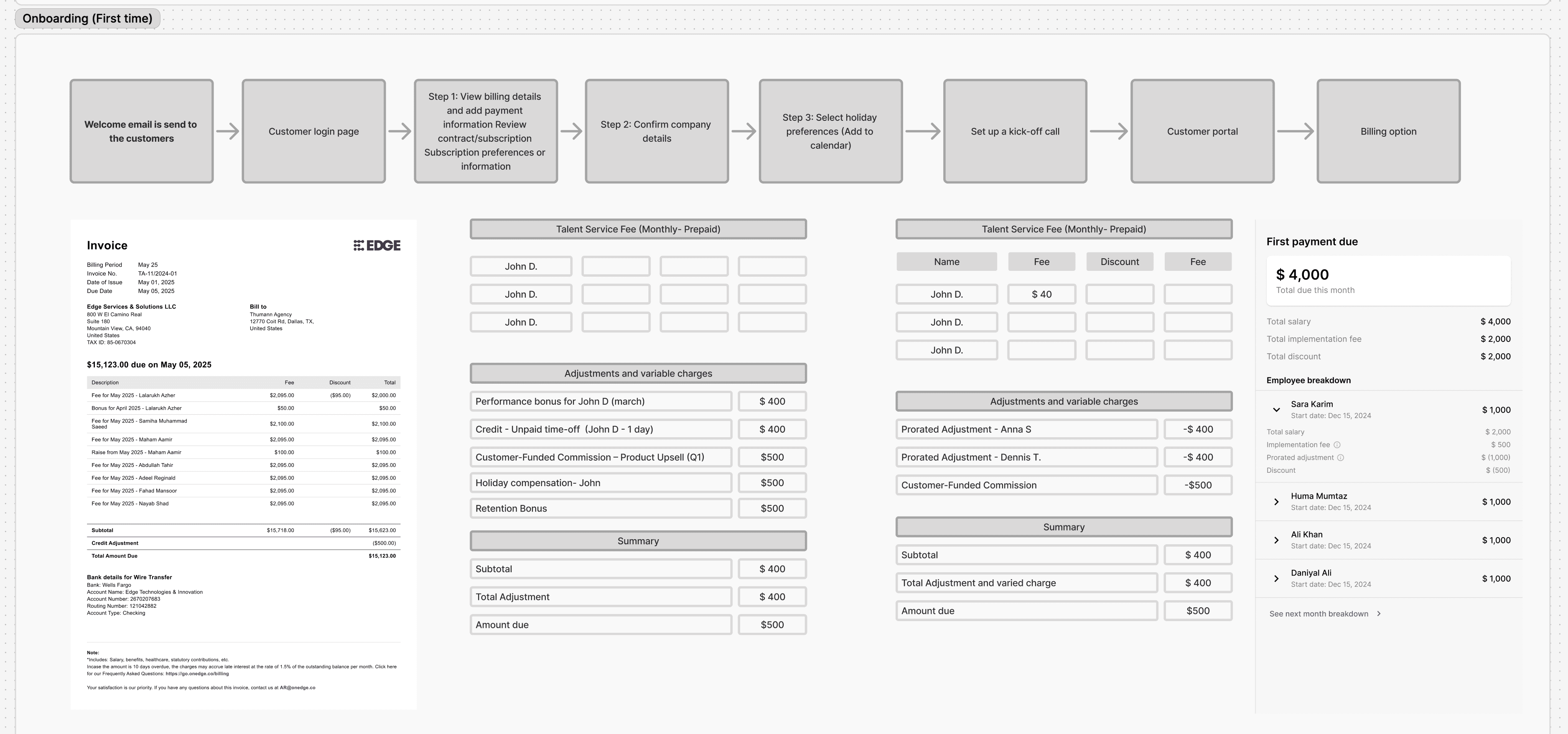
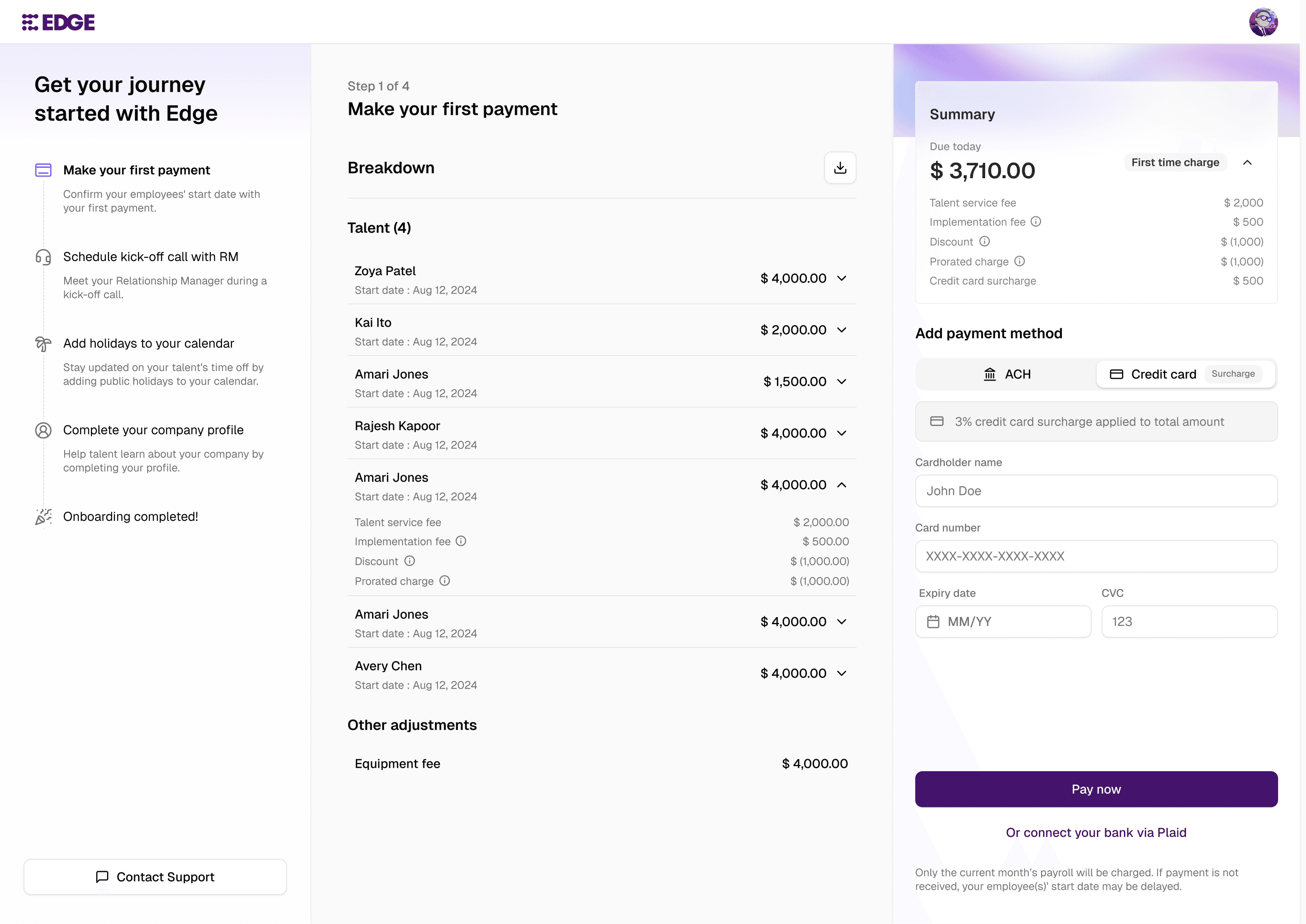
Poor cost transparency and limited payment options create critical friction at checkout, driving drop-offs and delaying talent start dates.
Constraints and Challenges
Incomplete breakdowns are the result of fragmented finance works flows and platforms. With manual entries, seperate payroll platform and discounts housed in salesforce it was important to being everything together.
Early on, credit card options were restricted to avoid surcharge-related friction that could negatively impact customer acquisition.
Where most of Edge customers were SMBs, they still had a finance manager who had to approve the payments and there was no workflow to share the invoice with rest of the team.
Leveraging US state surcharge rules to convince leadership on the need to bring credit card payments openly to our platform
Opportunities
Customers from certain states like California, Connecticut, Maine and Massachusetts do not allow any credit card surcharge. With Edge located within California, a significant chunk comes from there. Hence customers prefer paying using credit cards.
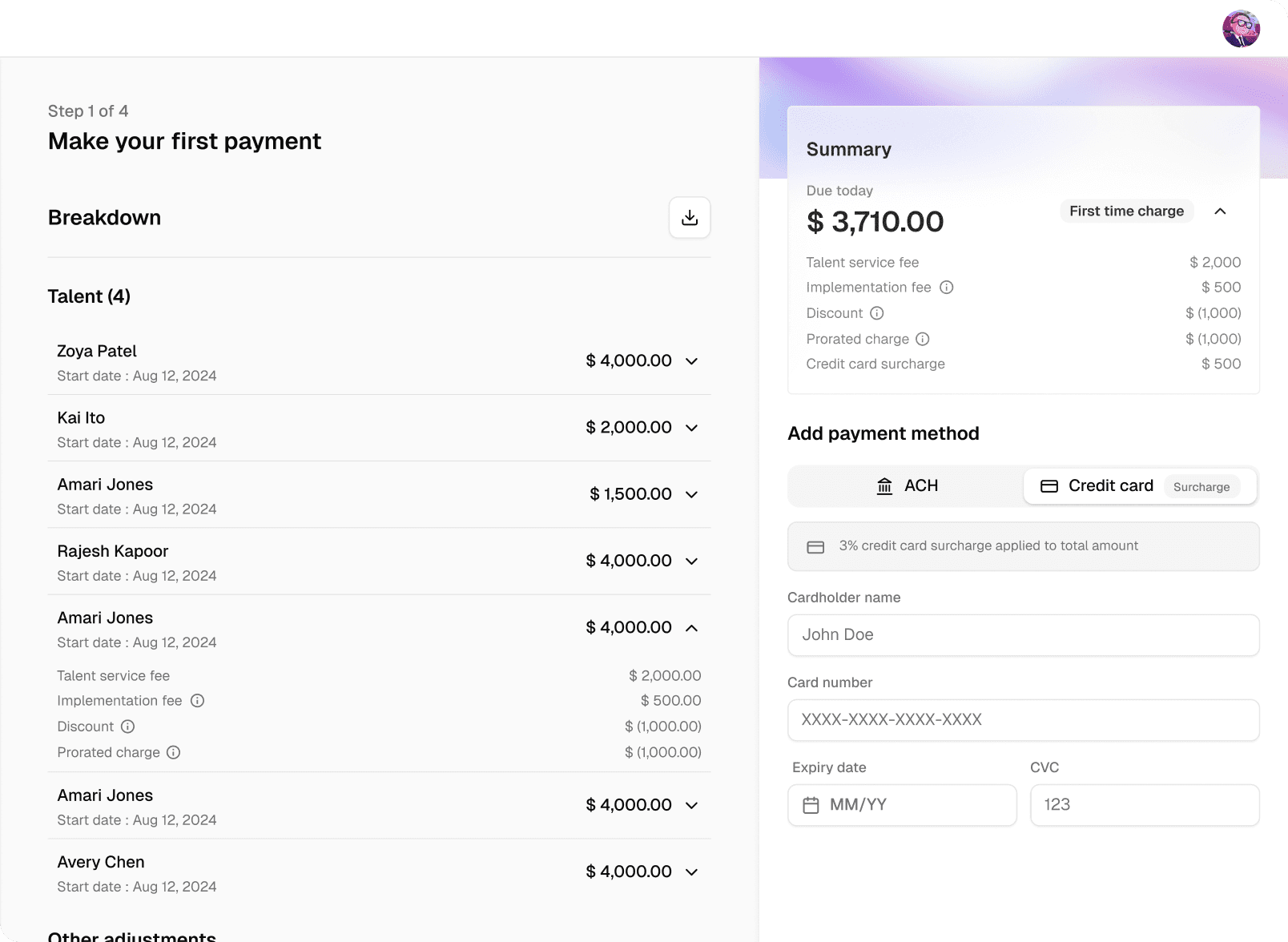
Early disclaimers and pre-calculated total amounts can ensure customers can make an informed decision about what payment method works for them. For instance, adding 3% surcharge and seeing the impact directly on the summary view.
With easy integrations Salesforce offers us, we can extract talent names, fee, start dates and discount (if offered to the customer) within our platform to offer better breakdowns.
Opportunities
Prorated charge leads to most confusion when customers are viewing their first time invoice. With extracting start dates from salesforce, we can show them via tool tip how exactly was this calculated. If they delay the payments, we can also show how these start dates can change.
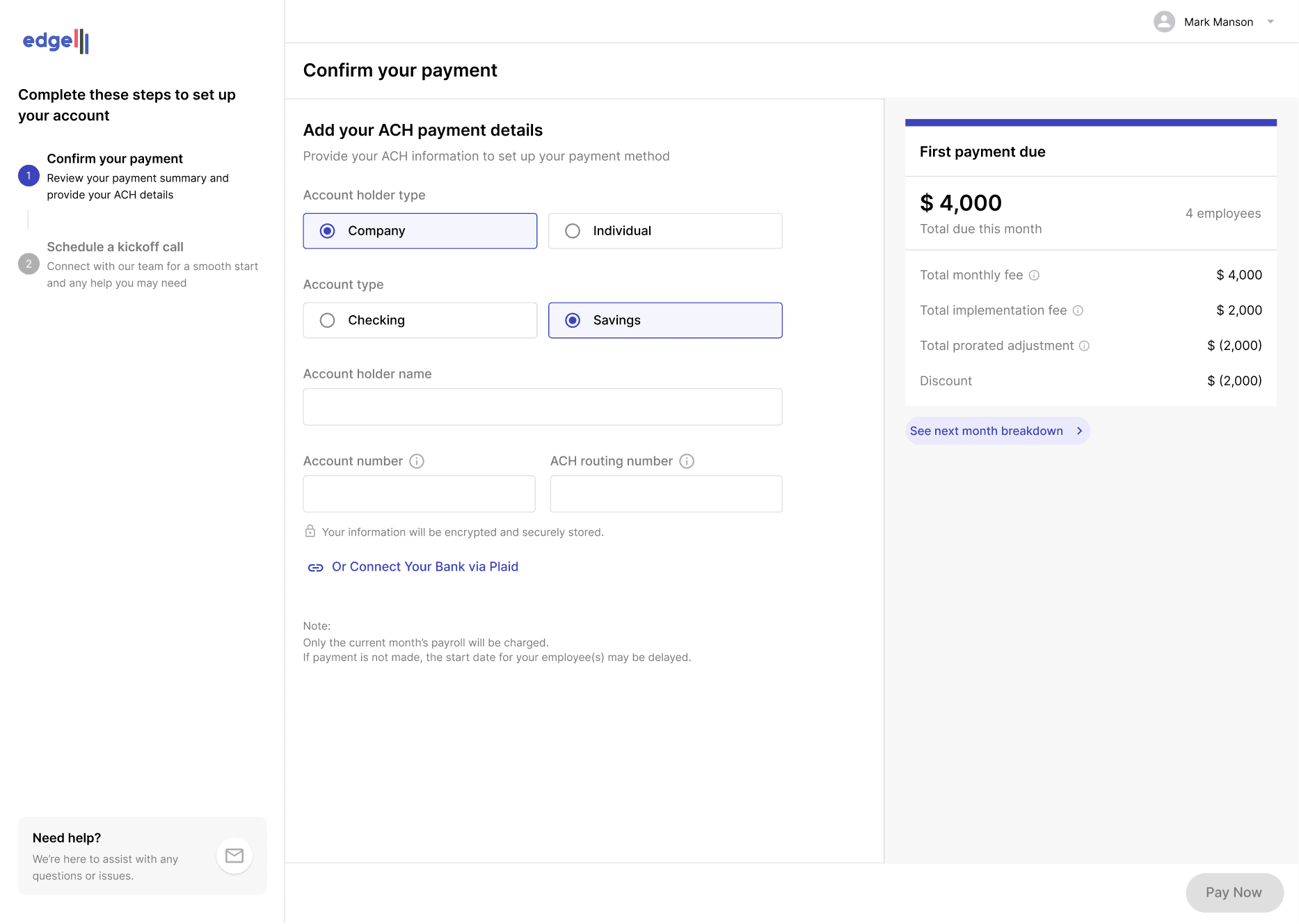
The older onboarding billing screen was swapped with the new one where there were deeper breakdowns, more payment options and start dates of the talent that made the first charge clearer.
PROBLEM SPACE 2 : DISTRUST IN THE BREAKDOWNS
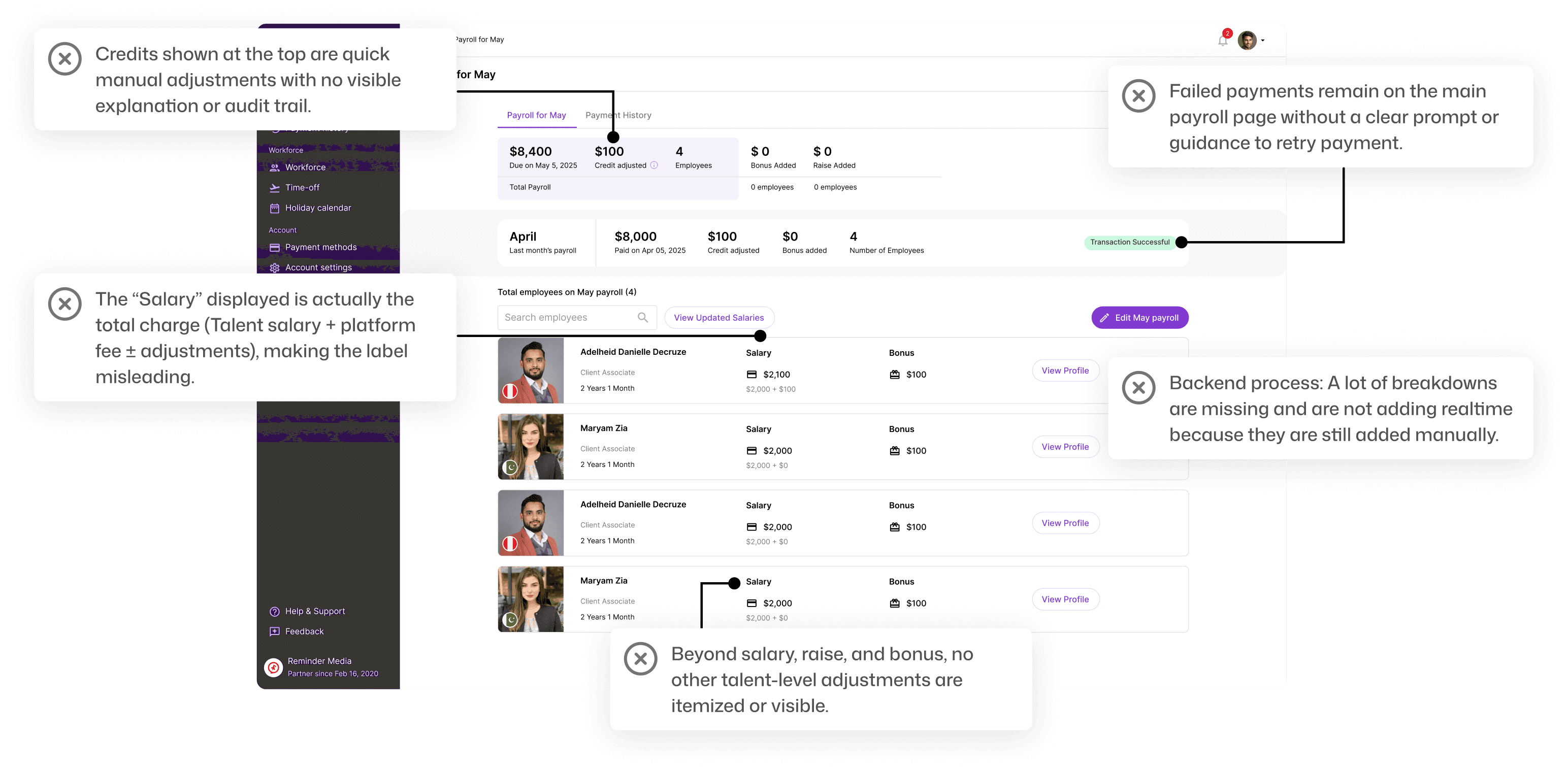
What seemed like simplicity—a single fixed fee—reduced transparency, leading to distrust and friction when customers considered raises or add-ons.
‘ Why is my talent not receiving the same salary as shown on platform?’ - Edge Customer
Key findings
Not all types of charges fall under payroll - Hence the use of the word 'salaries' and 'payroll' can become more confusing to Customers especially if they have to add salaries
This table highlights that not all charges or credits applied to customers are reflected on the payslip, making the “Payroll” label inaccurate and potentially misleading.
✅
✅
✅
✅
✅
✅
✅
✅
✅
✅
✅
✅
⛔️
✅
✅
⛔️
⛔️
⛔️
✅
✅
⛔️
✅
Benchmarking was conducted to understand how other EOR platforms like Deel or Remote handle these differences. 2 Approaches were shortlisted with one finalised.
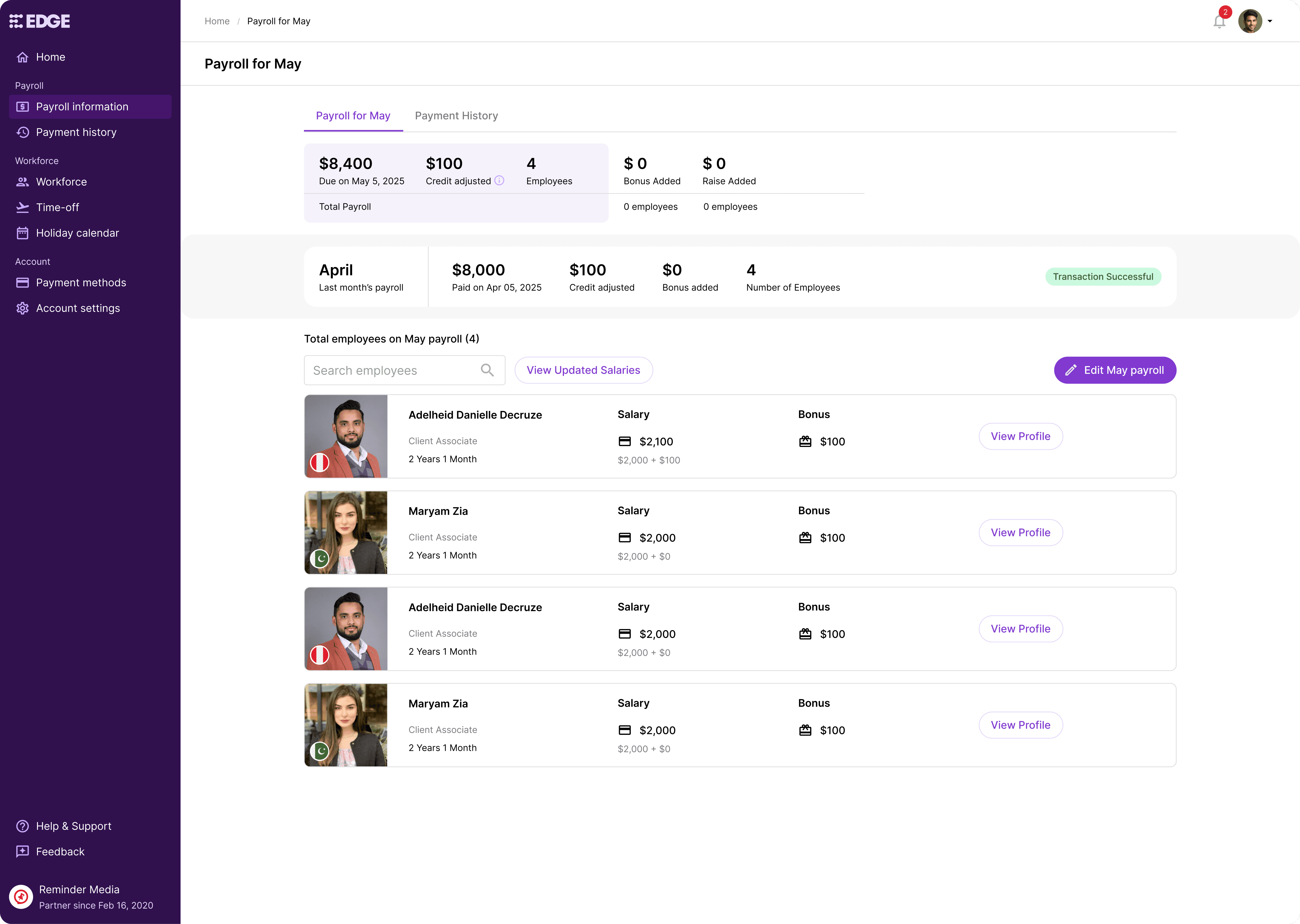
Approach 1 : Keep billing, invoice and payroll all with distinct differentiation using labels and tool tips
The term ‘payroll’ suggests customer ownership and control, which doesn’t apply to Edge-provided talent where payroll is managed by Edge—creating confusion due to this mismatch in expectations.
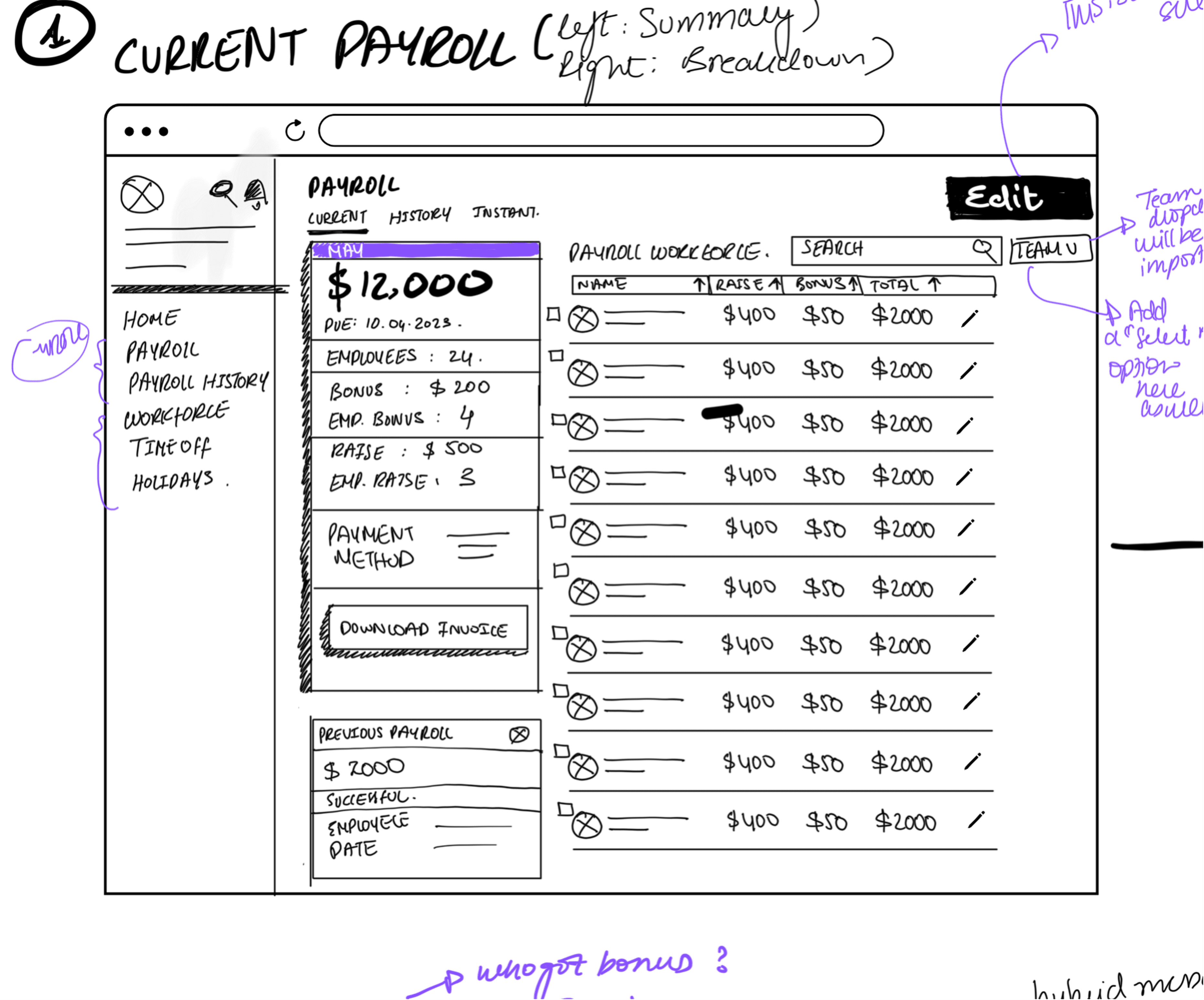
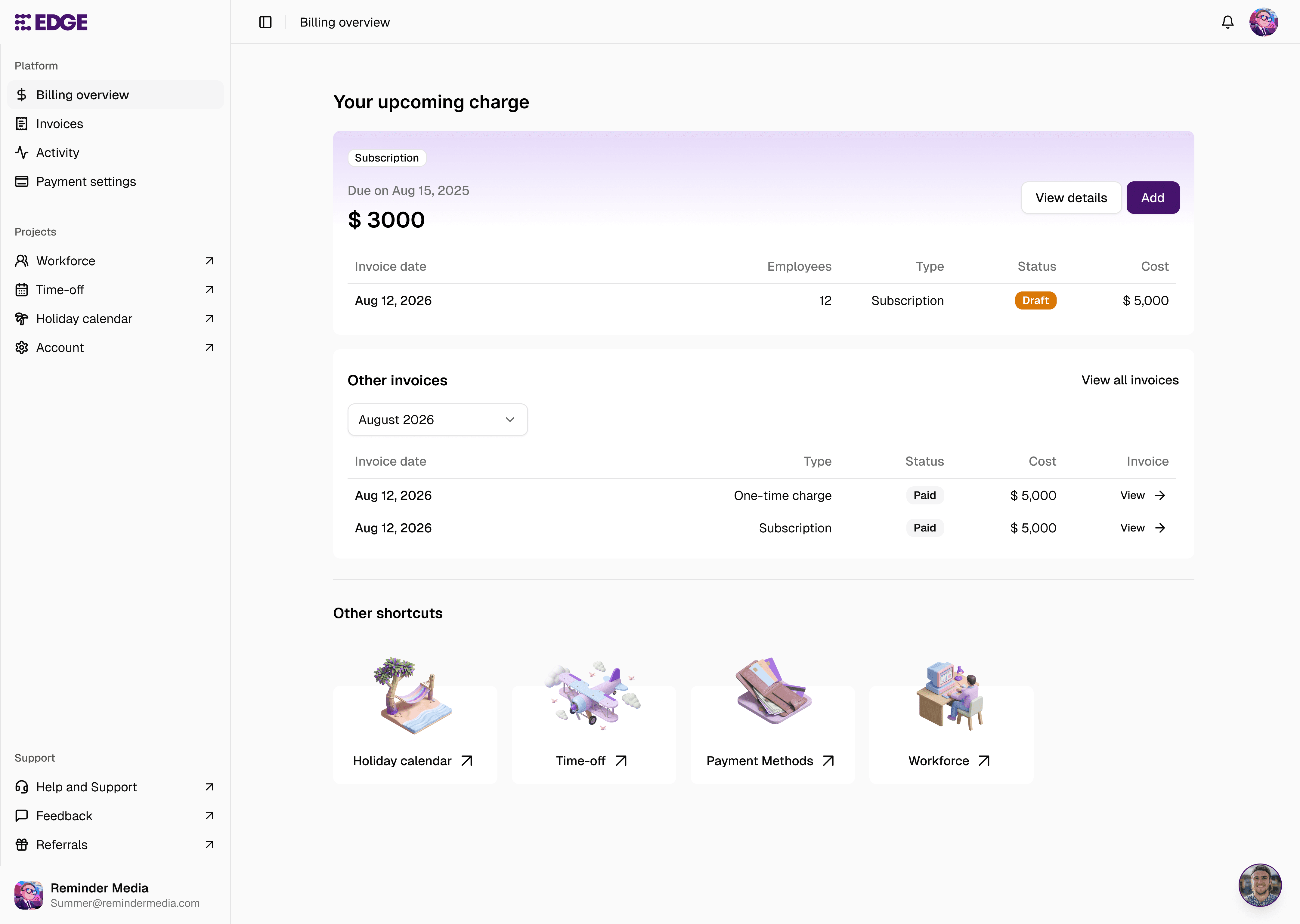
Approach 2 : Simplify things by calling it a Subscription upon which any payroll changes are categorised as add-ons. (Finalised)
A unified terminology simplifies the experience—turning it into a clear monthly ‘talent fee’ that users can easily understand and adjust, better aligning with our finance workflows.”
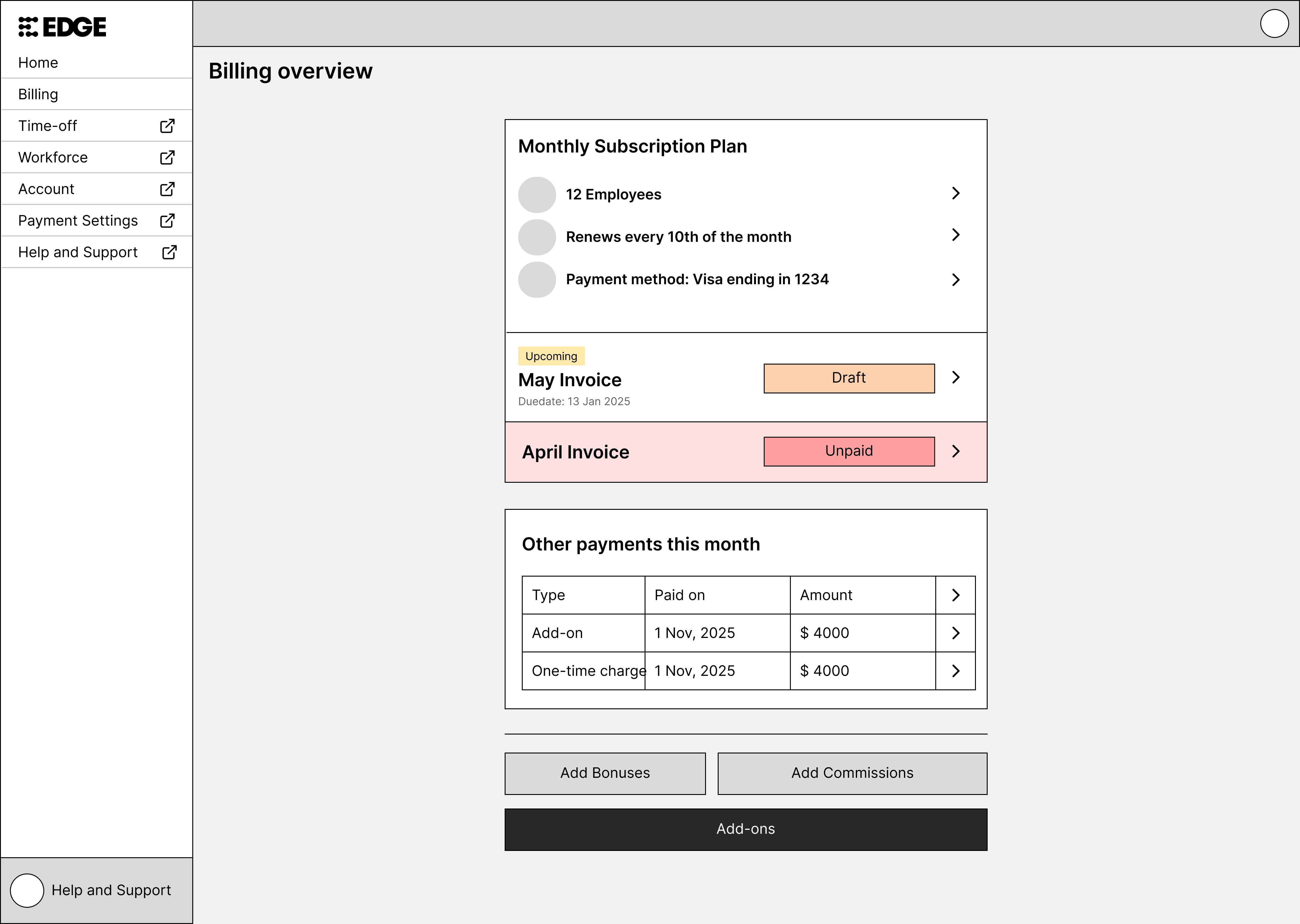
Finalised approach
PROBLEM SPACE 3 : CONFUSING PAYMENT TIMELINES AND SALARY EDIT FLOWS
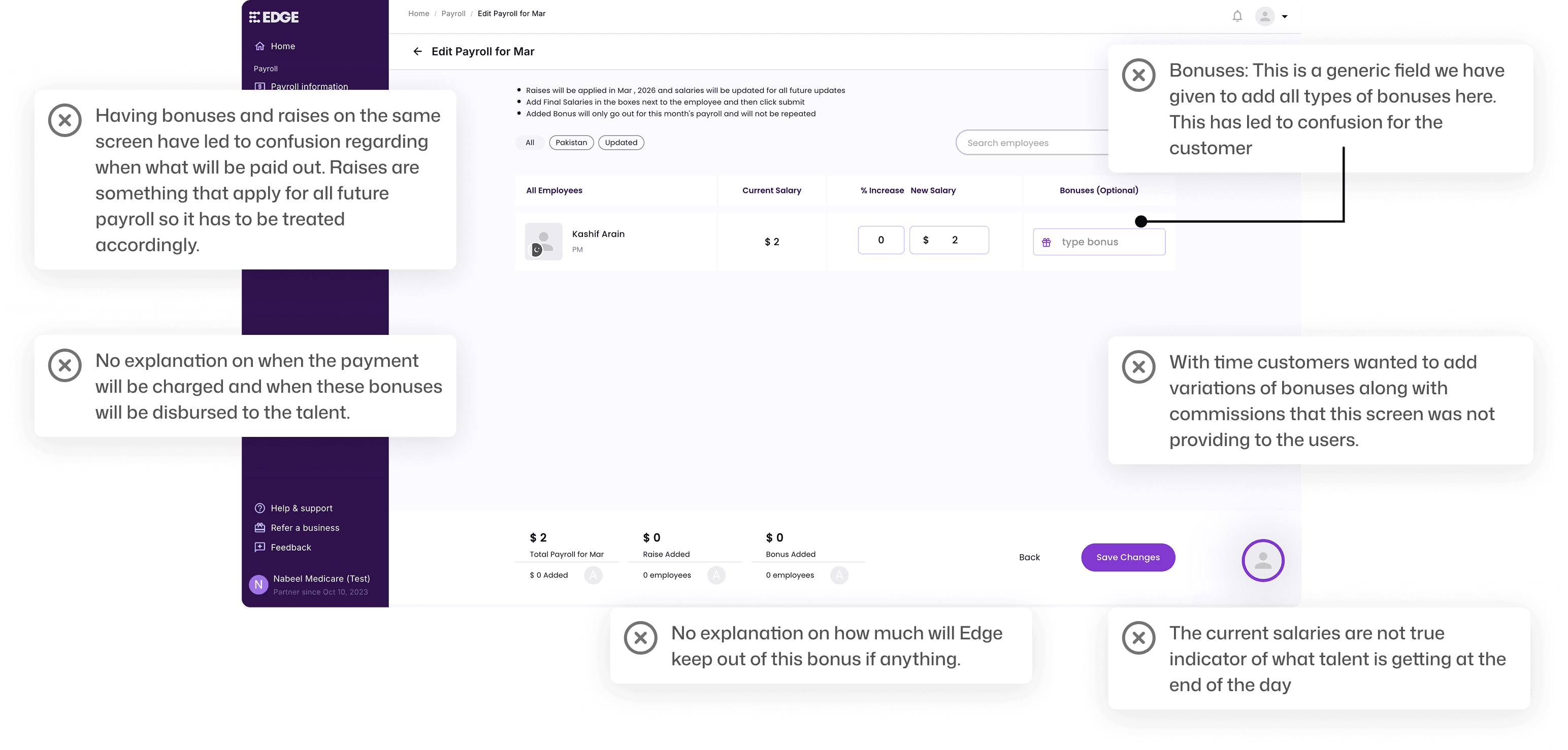
Customers who are interested in adding bonuses and raises often get hindered by lack of bonus types and categorisations, knowledge on how and when they will be paid on the platform.
‘ Can finance add this type of bonus for me? I cant seem to find it on the platform’ - Edge Customer
Key challenges for customers when adding bonuses and raises
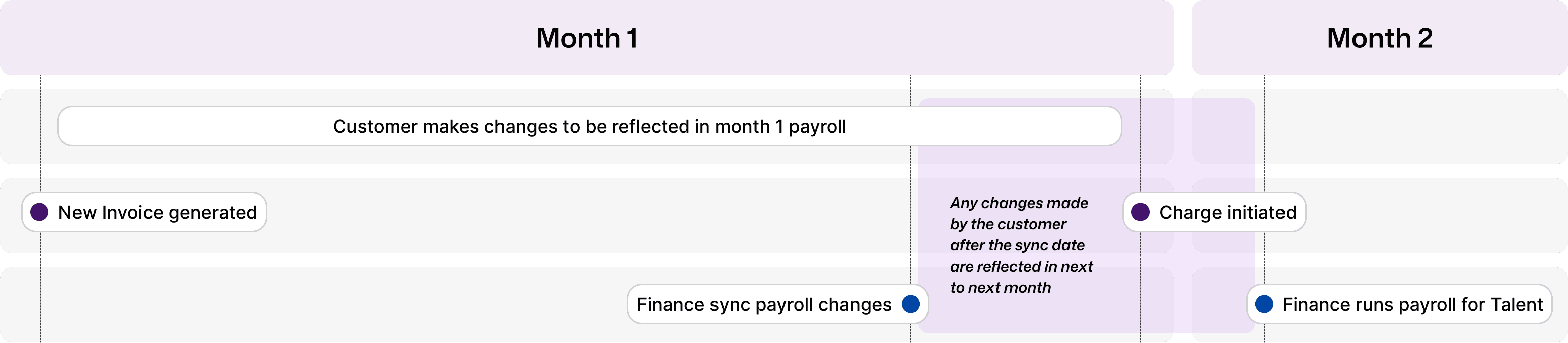
How do payments work and when do changes reflect on the invoices?
Updates made by each party involved (On platform or outside of it)
Updates made by customers
Performance bonuses
Holiday bonuses
Retention bonuses
Commissions
Recurring bonuses
Updated by Edge admin
Edge based retention bonus
Downsell
Refund
Sales promotions
Late fee
Equipment fee
Miscellaneous fee
System updated
Unpaid time-off charge
Holiday compensations (Later phase)
Downsell (Later phase)
Upsell (Later phase)
Referral rewards (Later phase)
Medical leave adjustment (Later phase)
Key challenges to solve:
1
Multiple parties contribute to invoices—system processes, Edge admins, customers, and any customer-added team members—creating a complex activity trail.
2
We deduced from manual edits finance makes on the invoice and payslips that there are multiple types of bonuses and commissions that customers often end up wanted to add.
3
Payment flows are confusing due to mismatched payroll and invoice dates; clear communication on when edits are charged and distributed to talent is essential.
4
Customers are unclear whether salary add-ons go entirely to talent, creating mistrust around Edge’s role in deductions.
Key solutions
1
Activity logs ensure that customers can track changes with complete transparency - Solidifying trust
Solutions
Activity logs will ensure customers know when Edge made a deduction or when they had to make changes internally. Any Edge, system or customer based changes are all tracked here.
To keep the invoice scan-able, we can add a small modified chip next to the name of the talent so they know where modifications were made for this particular payment cycle.
2
Options to add bonuses and commissions from within the customer interface - Imparting more responsibility upon customers rather than Edge
Solutions
A way to add multiple type of bonuses and commission types that they need to add per talent. This authenticates the ledger further and ensures payslips show the correct types.
View activity on this page to investigate further into any changes that may have occured.
3,4
Payment Tracking timeline to ensure customers are not in dark about when they can make a certain change for it to be reflected in the invoice.
Solutions
Real-time payment tracking to allow customers to navigate through confusing 2 month timeline for billing and processing payroll.
Payment failure and retries on it can be tracked using this tracker. This means that customers are fully notified on any failed charges and they are allowed to change their payment methods and retry (Retry highly dependent on stripe workflows enforced on platform).
Expected Impact
Due to the project still under work, we have only have extrapolated metrics derived from finance tickets and user sessions observed on heap and log rocket.
25%
Reduced first-charge drop-offs through clearer pricing and more payment options. This is measured by number of customers we get every month who require credit card as an option on the platform.
10% reduction in customer inquiries and tickets
Investing finance ticket types we can project that simplified billing will reduce customer queries. By removing “payroll” terminology and adopting a clear billing and subscription model, we made invoices easier for customers to understand and engage with.
A healthy increase in the overall bonuses and commissions being given to the talent by the customers.
Transparent, simplified billing increased confidence to add bonuses and commissions, boosting talent morale
Scalable design for future additions - Shadcn library allowing us to go AI heavy on the front-end.
The platform was designed as a revamped version that can eventually replace our legacy platform. With changing the platform, we are establishing stronger foundation for faster development going forward
Future considerations
Build automations to make sure customers are getting a complete breakdown. Items like upsells and down sells, overtime additions were still not factored in due to lack of infrastructure built around it.
Adding the bonus guidelines as part of the bonus adding interface for customer to understand what is a good amount to give someone in a different country
Add contract signing as part of the onboarding which currently happens outside of the platform.